

The Old James Dolan Is Back and the Knicks Championship Dynasty is at Stake

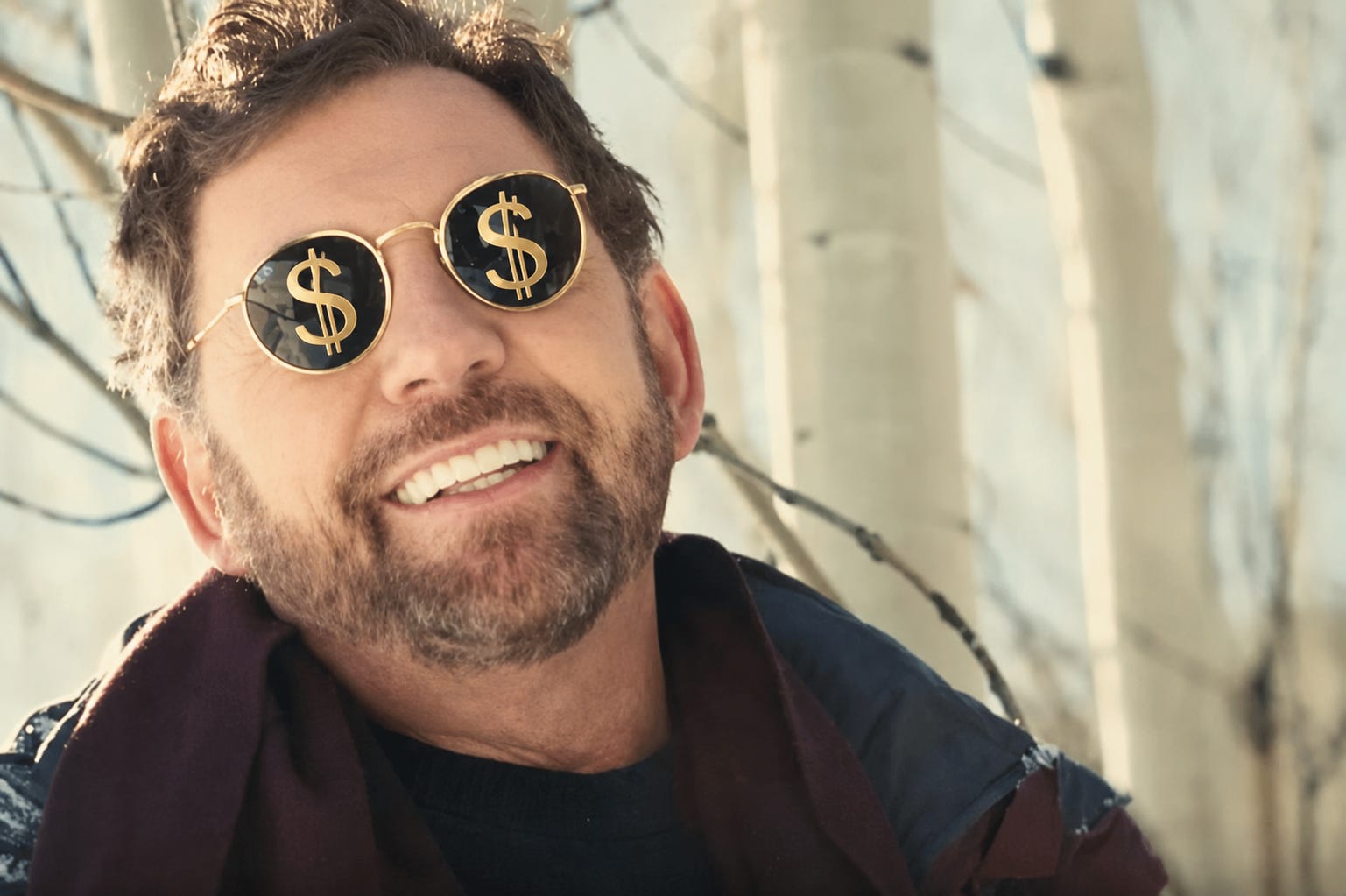
The short answer: Owner James Dolan declared on WFAN that the Knicks will not enter the NBA's second apron, the payroll line projected near $222 million for 2026-27. His own front office never advised that mandate and reportedly wants to cross it to keep the title-winning roster together. Staying under the cap will most likely cost New York free agents Mitchell Robinson and Landry Shamet. The basketball case for paying up is strong, the cap case for holding the line is real, and the media profits either way.
Four days after the New York Knicks won their first NBA championship in 53 years, owner James Dolan walked onto WFAN and started taking it apart.
“We cannot go into the second apron,” Dolan said on June 17. “We’re willing to stretch, but there’s certain things in the NBA that you’d have to be suicidal to do. One of them is the second apron.” He framed it as fiscal discipline, even tossed Leon Rose the keys: “I’ll write as big of a check as possible, but I can’t write a check that goes into the second apron.”
Here’s the problem. Nobody in the Knicks’ basketball operation asked him to say that. And on the merits, his own front office thinks he’s wrong.
The front office got blindsided
On the Katz & Shoot podcast, The Athletic’s Fred Katz and James Edwards, two of the most plugged-in reporters on the beat, said the front office never advised the mandate. “The not going into the second apron stuff, the front office did not advise that,” Katz explained. “Dolan went on the radio, said they’re not going into the second apron. And then there were people in the Knicks who were like, ‘Wait, what?’” Edwards finished the thought in one word: “They were blindsided.”
This was not a coordinated organizational stance. The owner freelanced on talk radio, and his own staff learned the new rules the same way the fans did. Worse for Dolan, they disagree with him. Katz reported that, despite Dolan's wishes, the front office wants to go over the apron, per league sources, because New York won the title on its depth. Shamet caught fire for a month, Jose Alvarado swung Game 4 of the Finals, and Robinson grabbed six offensive boards in the clincher.
If you stay under the apron, and you can’t keep them. The Knicks sit around $17 million below the projected $222 million threshold with Robinson, Shamet, Alvarado, Clarkson, and Hukporti all needing deals. Robinson alone projects to command $10 to $15 million on the open market. You can’t resign those dudes and stay compliant.
The dominoes are already falling. The New York Post’s Stefan Bondy reported it’s unlikely Robinson returns, tying it directly to Dolan’s cap stance. Marc Stein and Jake Fischer report the Nets and Lakers are circling him. The front office didn’t trade out of the first round of the 2026 draft for nothing. They’re trying to dodge guaranteed salary, a direct consequence of the mandate.
To be fair to the other side, the second apron is brutal and punishing, and not only in dollars and cents. Cross it, and you lose the ability to aggregate salary in trades, send or receive cash, use the taxpayer mid-level exception, or move your first-round pick seven years out. Three years over the line in a five-year window, and that pick slides to the back of the round. Dolan, whatever else you say about him, has paid out $207.5 million in salary plus roughly $45 million in luxury tax this past season. He’s many things. Cheap ain’t one of them.
Is Dolan wrong?
Ignore Dolan for a second. Would you cross the second apron? It turns out there’s a strong argument for both sides. Buckle up.
Why they should pay up
Spotrac and Basketball Reference have the Knicks already committed to about $205.7 million for 2026-27 across just 10 players, which is roughly $16 million short of the second apron, projected at around $222 million. It gets tighter. The five starters by themselves run about $191.7 million: Karl-Anthony Towns at $57.1 million, OG Anunoby at $42.5 million, Jalen Brunson at $37.7 million, Mikal Bridges at $33.5 million, and Josh Hart at $20.9 million. That leaves something like $14 million to re-sign Robinson, Shamet, Alvarado, and Clarkson and still put 14 bodies on the roster.
The argument is, why take apart a team that just won a chip? The Knicks won on their depth. As Fred Katz laid it out, Shamet went a month without missing a three-pointer, Alvarado was a massive part of Game 4 of the Finals, Robinson pulled down six offensive rebounds in the closeout, and Deuce McBride and Jordan Clarkson had great moments against Philadelphia and Cleveland. If those guys leave and there's no room to replace them with equal talent, the replacements will be way shittier. Katz’s cheapest re-sign scenario has the Knicks about $8 million over the line and staring at a $90 million tax bill; the pricier one runs $18 million over and closer to $150 million. That ain’t cheap.
No championship window stays open forever, and the Knicks are in theirs right now. So why not go over the apron for one year? Why not re-sign Robinson, run it back with the group that just won it all, then duck back under in 2027-28, before the repeater tax and the frozen-pick penalties kick in? Then the Knicks can chase flexibility the following summer. Once you break up a team that wins a chip, it’s hard as hell to get another.
Why they should stay firm
Bleacher Report’s Erik Beaston made the case for staying under, and it makes a lot of sense. This was never really about whether Dolan would write the check. The second apron takes away tools you can’t get back by spending more. Cross it and you can’t combine salaries in a trade, can’t send or take in cash, lose the taxpayer mid-level exception, and can’t trade your first-round pick seven years out. Stay over the line three years in five, and that pick drops to the bottom of the round. The Knicks already shipped most of their draft capital to Brooklyn, so trading away the flexibility they have left to hang on to older role players is a massive gamble.
It also matters who we’re talking about. Robinson protects the rim and is one of the best offensive rebounders alive, but he scored 5.7 a game last year, gets hurt a lot, doesn’t play back-to-backs, lives on a load-management plan, and is the worst free-throw shooter of all time. Shamet can shoot, but he’s dislocated the same shoulder twice in two years. Paying into the most punishing part of the cap to keep a part-time center and a banged-up wing is why the apron was built to talk teams out of. Cleveland went over last season and spent the season with its hands tied.
Lucky for the Knicks, the contracts line up around a solid plan. Towns has a $61 million player option for 2027-28, Hart has a $22.4 million team option the same year, and Brunson ($43.3 million) and Anunoby ($48.4 million) both have player options in 2028-29. The read all along was that the Knicks would stay under for two years, dip over for two, then duck back below before the repeater penalty bites.
Blow the plan up now, for Robinson, and you might not be able to keep some starters later, with Brunson next in line and likely no discount coming the second time. Pay the stars, let the role players go, lean on a front office that has earned some trust to find cheap bench help.
It's business, not personal.
Where this leaves us
Honestly, it’s close. A sharp front office could go either way and have a good reason. The rest of the league isn’t exactly storming past the line either: only Cleveland went over the second apron last season, while Boston and Minnesota spent the summer dumping salary, which shows how most contenders approach the second apron. The Oklahoma City Thunder are next, as they won’t be able to keep Isaiah Hartenstein and Lu Dort, unless they want to pay a nasty luxury tax. So “stay under” was never the crazy part.
Leon Rose might have landed there himself. The crazy part is how it happened: the owner getting out in front of his own basketball people, in public, with no warning, taking the call out of Rose’s hands.
Knicks for Clicks: Why the media won’t give the Knicks their due
For two decades, sports media treated the Knicks as a punchline while cashing the checks that bashing them generated. That is the engine behind “Knicks for Clicks.” Writer Omar Zahran defined it years ago as the practice of publishing Knicks-centered stories because the team reliably draws attention and clicks. He called it, pointedly, the “exploitation of hope.”
That exploitation pays. During New York’s run, the trade publication The Measure documented the payoff with Google Trends data: U.S. news search interest in the Knicks climbed all spring and spiked to the 100th percentile during the conference finals. “Knicks Cavaliers” jumped 1,150 percent over the prior period and ranked as the No. 2 sports search term in the country.
So why does the coverage skew negative toward a team that just won it all?
The attention economy
Start with the foundation. In 1971, economist and future Nobel laureate Herbert Simon coined the term “attention economy,” warning that a flood of information creates a “poverty of attention.” Whoever captures that attention wins. Columbia law professor Tim Wu built on the idea in The Attention Merchants, casting the modern outlet as an “attention broker” that gathers an audience with content and resells it to advertisers. The Knicks, with their enormous and rabid fanbase, are one of the richest sources of attention in American sports. In the most literal economic sense, the fans are inventory.
Negativity bias and the scary world syndrome
Engagement-maximizing media does not reward accuracy or fairness. A Georgetown Law analysis of the attention economy notes that algorithms favor outrage and sensational framing because it drives watch time and clicks, and that false, emotionally charged news travels roughly six times faster than sober truth. A measured “the Knicks are good and should keep their bench” take generates nothing. A hot “Dolan is sabotaging the dynasty” take is rocket fuel.
Knicks fans are built to bite. Negativity bias, the human tendency to react harder to negative stimuli, is one of the most robust findings in psychology. In their study “The Scary World Syndrome,” researchers Kim Andersen, Monika Djerf-Pierre, and Adam Shehata treat negativity bias as a defining feature of news reporting, and extend George Gerbner’s original “mean world syndrome” into a broader “scary world syndrome,” where a steady diet of negative coverage cultivates anxiety across the board. Point that machine at the Knicks and you get relentless doubt, manufactured controversy, and the instinct to frame even a championship as fragile.
Why Dolan’s blunder is catnip for the machine
Here’s the irony. The media needs the Knicks to feed the aggregation machine, but the machine cannot treat them with respect, because respect does not pay. Dolan walked onto WFAN and handed the click economy a fresh barrel of fuel: an owner publicly clashing with his own front office days after a title. That is why so many Knicks fans just want him to put the microphone down. The “Knicks for Clicks” economy runs on Knicks dysfunction, and Dolan keeps supplying it.
The bottom line
The basketball case is simple, and Katz made it best: the Knicks should foot the second-apron bill, because not doing so would be even more costly. You do not break up a champion full of players in their primes to dodge a tax you can plainly afford. You especially don’t do it by ambush.
The Knicks climbed the mountain. The one real threat to staying up there isn’t the Celtics, the Cavs, or the cap sheet. It’s the man in the owner’s box who can’t resist opening his mouth. The old James Dolan is back. Knicks fans have seen this movie before and already know how it tends to end.
FAQ
Did James Dolan say the Knicks won’t go into the second apron? Yes. On WFAN on June 17, 2026, Dolan said, “We cannot go into the second apron,” adding that doing so would be “suicidal.” He said he would write as large a check as possible but not one that crosses the second-apron threshold, leaving personnel decisions to team president Leon Rose.
What is the NBA second apron and why does it matter for the Knicks? The second apron is a payroll threshold, projected at roughly $222 million for 2026-27, set about $21 million above the luxury-tax line. Teams above it lose major roster tools: they can’t aggregate salaries in trades, send or receive cash in deals, use the taxpayer mid-level exception, or freely trade a first-round pick seven years out. For the Knicks, staying under it likely means losing free agents like Mitchell Robinson and Landry Shamet.
Was the Knicks front office blindsided by Dolan’s comments? According to The Athletic’s Fred Katz and James Edwards on the Katz & Shoot podcast, yes. They reported the front office did not advise the mandate and was caught off guard, with people inside the organization reacting “Wait, what?” after Dolan’s radio appearance.
Does the Knicks front office want to go into the second apron? Reporting from Fred Katz of The Athletic indicates the front office wants to exceed the second apron to retain its title-winning depth, because dipping below it would cause much of that depth to leave. Dolan, as of the latest reporting, has not changed his mind.
Is Mitchell Robinson leaving the Knicks? It’s increasingly likely. The New York Post’s Stefan Bondy reported Robinson is unlikely to return, tied directly to Dolan’s refusal to enter the second apron, and Marc Stein and Jake Fischer have reported the Nets and Lakers as potential suitors. Robinson projects to command roughly $10 to $15 million in free agency.
What does “Knicks for Clicks” mean? “Knicks for Clicks” describes the media practice of producing Knicks-centered stories, videos, and posts primarily because the team’s large, passionate fanbase reliably generates traffic and engagement. Writer Omar Zahran framed it as “the exploitation of hope.” Google Trends data during the Knicks’ 2026 playoff run showed search interest spiking to the 100th percentile, confirming the commercial incentive.
Why does the media cover the Knicks negatively if they just won a title? The structural answer comes from attention-economy theory. Outlets monetize attention, and research on negativity bias shows audiences attend more to negative and sensational information, which engagement-driven media therefore prioritizes. A self-inflicted controversy like an owner publicly clashing with his front office is exactly the kind of story that drives clicks, regardless of the team’s on-court success.
Works Cited
Andersen, Kim, Monika Djerf-Pierre, and Adam Shehata. “The Scary World Syndrome: News Orientations, Negativity Bias, and the Cultivation of Anxiety.” Mass Communication and Society, vol. 27, no. 3, 2024, pp. 502–524. https://doi.org/10.1080/15205436.2023.2297829
Bondy, Stefan, reporting cited in “Report: Mitchell Robinson Expected to Leave Knicks in Free Agency.” Posting and Toasting, 26 June 2026. https://www.postingandtoasting.com/knicks-free-agency-rumors-news/86538/report-mitchell-robinson-expected-to-leave-knicks-in-free-agency
Cassillo, John. “How ‘Knicks For Clicks’ Can Pay Off For News.” The Measure, 26 May 2026. https://www.themeasure.net/knicks-for-clicks-paying-off-for-news-new-york-finals-nba-search-google/
Goodwill, Vincent. “James Dolan: Won’t go into second apron to keep Knicks intact.” ESPN, 17 June 2026. https://www.espn.com/nba/story/_/id/49077199/dolan-asked-knicks-sacrifice-title-april-speech
Katz, Fred. “Knicks should foot second apron bill. Not doing so would be even more costly.” The Athletic, 26 June 2026. (Quoted via) https://www.si.com/nba/knicks/onsi/knicks-second-apron-situation-isnt-just-about-spending-money-01kvw9z3qqmx
Katz, Fred, and James Edwards. Katz & Shoot podcast, reported in “Knicks Front Office ‘Blindsided’ by James Dolan Second Apron Mandate.” Heavy, 26 June 2026. https://heavy.com/sports/nba/new-york-knicks/front-office-blindsided-james-dolan-mandate/
“The Attention Economy and the Collapse of Cognitive Autonomy.” Denny Center for Democratic Capitalism, Georgetown Law, 15 July 2025. https://www.law.georgetown.edu/denny-center/blog/the-attention-economy/
Robinson free-agency reporting. ClutchPoints, 26 June 2026. https://clutchpoints.com/nba/new-york-knicks/knicks-rumors-front-office-pleading-james-dolan-save-mitchell-robinson-situation
Simon, Herbert A. “Designing Organizations for an Information-Rich World,” discussed in “Second Wave of Attention Economics.” Interacting with Computers, Oxford Academic, vol. 37, no. 1, 2025. https://academic.oup.com/iwc/article/37/1/18/7733851
Simineri, Steven. “Knicks’ Second Apron Situation Isn’t Just About Spending Money.” Sports Illustrated / OnSI, 26 June 2026. https://www.si.com/nba/knicks/onsi/knicks-second-apron-situation-isnt-just-about-spending-money-01kvw9z3qqmx
Stein, Marc, and Jake Fischer, reporting cited in “Knicks Dealt Unfortunate News Just Days Before NBA Free Agency.” Heavy, 26 June 2026. https://heavy.com/sports/nba/new-york-knicks/nyk-ny-knicks-rumors-news-nba-free-agency/
Wu, Tim. “Attention Brokers.” NYU Law. https://www.law.nyu.edu/sites/default/files/upload_documents/Tim%20Wu%20-%20Attention%20Brokers.pdf
Zahran, Omar. “The Knicks For Clicks Phenomenon.” Medium, 6 July 2021. https://omarzahran.medium.com/the-knicks-for-clicks-phenomenon-76d0b1d3710
Remember we made some tough decisions on the way to winning the championship. Trading 2 young homegrown talents in RJ Barrett and Immanuel Quickley for OG Anunoby. Trading Julius Randle and Donte DiVincenzo for Karl-Anthony Towns. Replacing Tom Thibodeau with Mike Brown who wasn’t even the Knicks top choice at coach.